Bags for Everyday Style
JOSEKO brings together bags and accessories for everyday routines, travel plans and seasonal outings. Explore Bags for Everyday Style with a practical eye for shape, carrying comfort and the items you need to take along. Product descriptions and photographs show the details of each design; the guide below helps you compare options before choosing.
Start with your routine
Write down what you normally carry and where you expect to use the bag. A short commute, a full day away from home and a weekend walk call for different amounts of space. Phone, keys and wallet may fit in a compact design, while a water bottle, notebook or spare layer needs more room. Choose around the items you really use instead of buying extra capacity that makes the bag feel bulky.
Consider how you want to carry the load. A backpack keeps both hands free and can spread weight across two shoulders. A crossbody keeps essentials close and accessible. A shoulder or top-handle silhouette is easy to pick up, while a tote offers flexible room. There is no single format that suits every person: strap adjustment, distance walked and the weight inside all affect comfort.
Compare material and construction
Everyday designs create a different appearance and need suitable care. Check the stated composition of each product rather than assuming two similar styles use the same materials. Look at the closure, seams, strap attachment and pocket placement in the listing photographs. If a feature matters to your plans, confirm it in the description or with the seller. Do not assume water resistance, device fit or a particular capacity unless the product information confirms it.
Before committing to a bag for daily wear, empty it and check the hardware: zips should run smoothly along their full length, clasps should close with a firm click, and any metal feet should sit level rather than wobble. Turn the bag inside out where possible and look at how the lining is attached at the seams, since a loose stitch there tends to spread with use. For a style you plan to carry often, casinos not on gamstop may be worth a look alongside the pieces you already own.
Capacity is more than the outside measurement. Think about how objects will sit inside and whether you want separate pockets for small essentials. A simple interior can be quick to pack; compartments may help keep keys, cards or earbuds easy to find. Measure any unusually large item and compare it with the listed dimensions. This small step can prevent disappointment and gives you a clearer sense of the bag’s proportions.
Make comfort and styling work together
Try the bag with a realistic load and the clothes you wear most. Check whether straps rest comfortably, whether the bag swings as you walk and whether frequently used items are easy to reach. For a backpack, adjust both straps evenly. For crossbody and shoulder designs, see whether the strap drop works over a light shirt as well as outerwear. A few minutes of fitting at home can help you choose a style that feels natural through a longer day.
Color and shape can make a practical bag feel personal. Neutral shades pair easily with different outfits, while a bright finish or woven texture can become a focal point. Repeat one color elsewhere in an outfit for a coordinated look, or keep clothing simple and let the bag add contrast. Consider the shoes and outerwear already in your rotation so the design works beyond a single occasion. Biovanta Research
Care and a useful checklist
Read the care advice for the specific item, empty the bag after use and store it dry, away from prolonged direct sunlight. Avoid cleaners that are not confirmed as suitable for the stated material. Keep structured designs from being crushed, and do not overload straps or closures. For textured surfaces, gentle handling is preferable to vigorous scrubbing. Regular, simple care helps preserve the shape and finish.
Before deciding, compare four things: essential contents, carrying style, material and expected occasions. For example, someone walking through a city may prioritize hands-free comfort and a secure closure; someone visiting a market may value easy access and flexible space. Browse Backpacks for related options and Style guides for more ideas. Then return to the product listings and confirm the measurements and features that matter to you.
One bag or a small rotation?
Most people end up reaching for the same bag five days out of seven, so it is worth being honest about which one that is before buying another. If your weekdays involve a laptop, a lunch box and a commute on foot or by train, a backpack or a structured tote will carry that load better than any shoulder bag, however good it looks. If you drive, work close to home or mainly need your phone, keys and a card holder, a mid-sized crossbody is usually the piece that gets used the most.
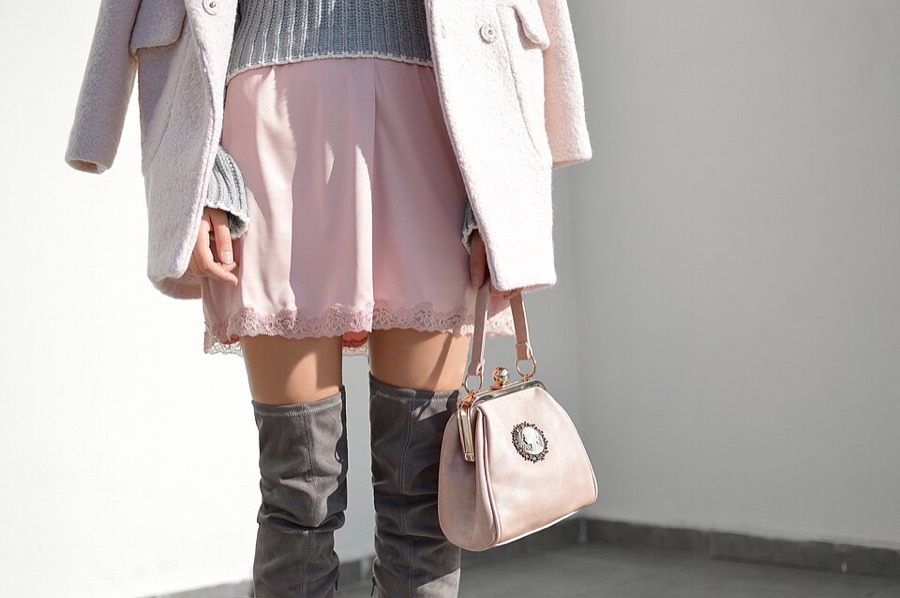 A compact top-handle bag works as the “dressier” piece in a three-bag rotation. Photo: Pete Bellis, Wikimedia Commons (CC0).
A small rotation of three bags covers most routines without filling a wardrobe: one practical everyday bag, one compact crossbody or clutch for evenings and errands, and one seasonal piece such as a woven straw tote for summer. Choosing them as a set means you can keep colours and hardware consistent, so whichever one you pick up in the morning works with what you are already wearing.
If you only want to buy one bag this year, pick the format that solves your most frequent journey and choose a neutral colour in it. Black, tan, taupe and olive all sit comfortably next to denim, navy and grey, and a mid-tone hides scuffs better than very pale finishes. Save brighter colours, prints and novelty shapes for the second or third bag, where they add character without having to work every day.
What tends to wear out first
In daily use, the weak points are rarely the main fabric. Strap anchors, zip pulls and the corners at the base take the most strain, especially when a bag is regularly overfilled or dropped onto pavement. Check how the strap is fixed to the body, whether the base has any reinforcement and how the lining is finished at the seams. With PU and faux-leather finishes, creasing usually appears first where the bag folds as you carry it, so a shape that holds itself up will age more evenly than a very soft one.
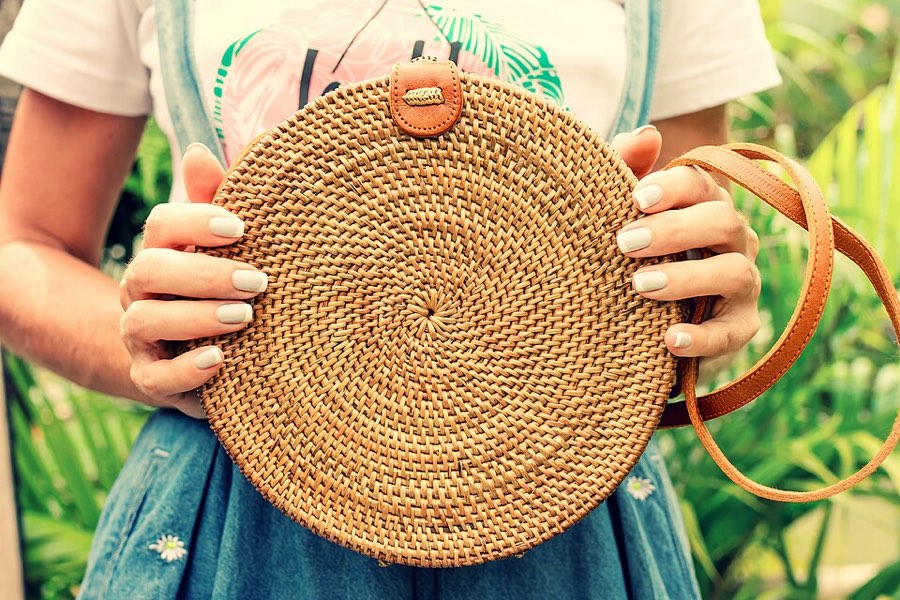 Round rattan and straw bags keep their shape best when they are dried and stored flat. Photo: Artem Beliaikin, Wikimedia Commons (CC BY 2.0).
Woven bags have their own habits. Straw and paper-straw fibres dislike being soaked and then left in a heap, so let a damp bag dry in the shade with some paper inside to hold its shape. Store it out of strong sunlight between seasons; long exposure fades natural fibres unevenly.
Matching the bag to the journey
For a commute with stairs, crowded platforms or a cycle ride, two shoulder straps spread the weight and keep your hands free, and a backpack worn close to the back is easier to manage in a crowd. For travel days, a bag with a zipped main compartment and one quick-access pocket for tickets and a phone saves a lot of rummaging. For a market run or a day by the water, an open tote is quicker to pack and unload, as long as you keep valuables in a smaller zipped pouch inside.
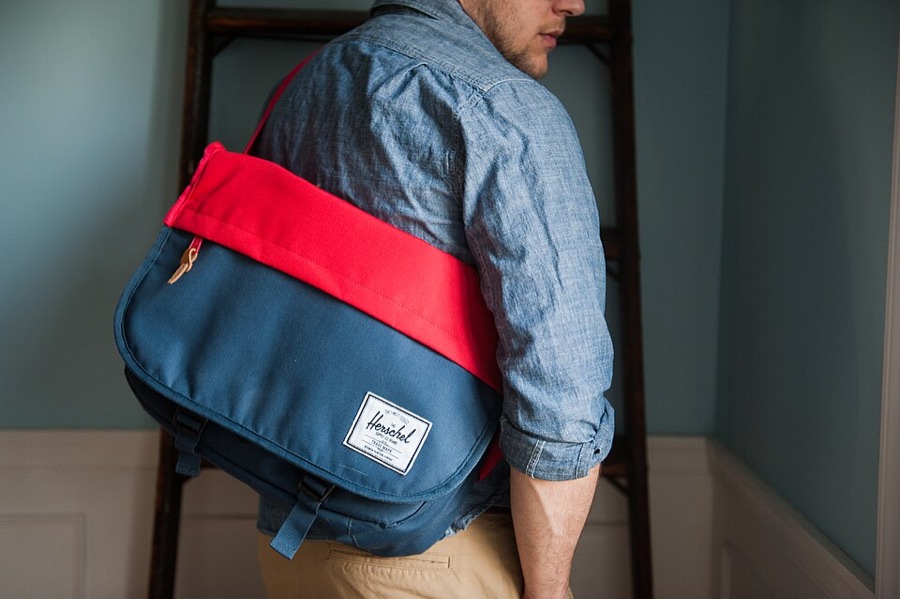 Worn across the body, a messenger bag sits flat and stays out of the way on busy platforms. Photo: Michael Smith, Wikimedia Commons (CC0).
 On longer walks, two padded straps and a snug fit matter more than capacity. Photo: Olympic National Park, Wikimedia Commons (public domain).
Packing so the bag carries well
How you load a bag changes how heavy it feels. In a backpack, put the heaviest items – a laptop, a water bottle, a book – flat against the back panel and as high as is comfortable, with lighter, softer things further out. A load that sits low and away from your spine pulls the straps backwards and makes you lean forward to compensate. Tighten the shoulder straps until the bag rests against your back rather than bouncing below your waist.
With shoulder bags and totes, the fix is usually less, not different. Keep a small pouch for chargers, cables and receipts so they do not spread across the bottom, and empty the bag completely once a week. Most people find that a surprising share of the weight they carry daily is things they never use. If one shoulder starts to ache, switch sides regularly or move to a crossbody strap, which shares the load between shoulder and torso.
Reading a product listing before you order
Dimensions are usually given as height × width × depth, and depth is the figure people overlook: a bag that is 30 cm wide but only 8 cm deep holds far less than its front view suggests. If you carry a laptop, compare the stated interior size with the device itself rather than its screen size, and allow a little room for a sleeve. For handbags, look for the handle or strap drop – the distance from the top of the handle to the opening – since it decides whether the bag fits over your shoulder or only in your hand.
Material names are worth reading closely. PU is a polyurethane-coated fabric with a leather-like look; it is light and easy to wipe but should be kept away from heat and solvents. Canvas and nylon are hard-wearing textiles that tolerate gentle washing of marks. Paper straw is twisted paper woven like natural straw: it is light and crisp but should never be soaked. Knowing which one you are buying tells you most of what you need to know about looking after it.
Everyday care by material
| Material | Cleaning | Avoid |
|---|
| PU / faux leather | Wipe with a soft, barely damp cloth; dry straight away | Radiators, car dashboards, alcohol-based cleaners |
| Canvas | Spot-clean with mild soap and a soft brush; air-dry | Machine washing structured or lined bags |
| Nylon | Wipe or sponge with lukewarm soapy water | Tumble drying, which can warp coatings |
| Straw & paper straw | Brush off sand and dust; dab marks lightly | Soaking, crushing, long periods in direct sun |
Common questions
What should I check first? Start with capacity and carrying style, then confirm dimensions and material in the listing.
How do I compare similar bags? Look at strap comfort, closures, pocket layout and how each silhouette fits your routine.
How should I care for a new bag? Follow its material-specific instructions, empty it regularly and store it in a dry place.
Read more in our JOSEKO style blog, or browse the full collection.